Blog

ASIA'S LNG DEMAND SLOWS AS CHINA CUTS BACK, U.S. BECOMES KEY SUPPLIER AMID SHIFTING GLOBAL FOWS.
Asia’s liquefied natural gas (LNG) imports are showing signs of stagnation in May 2025, with demand weakened primarily by China’s reduced appetite due to high prices and an increased reliance on domestic and pipeline-supplied gas. As the world’s top LNG importer pulls back, global LNG flows are being reshaped, with the United States stepping in to capture a larger market share. This shift is not just an energy trade story it’s a signal of broader economic realignment and geopolitical maneuvering. With traditional suppliers like Australia facing supply disruptions and Middle Eastern producers being pulled toward new opportunities, Asian nations now face increasing pressure to secure long-term, cost-effective LNG deals. At the same time, the drive to import more from the U.S. intertwines energy security with diplomacy, trade leverage, and competition for limited supply. The future of Asia’s LNG market now sits at the crossroads of global pricing dynamics, strategic partnerships, and the evolving energy transition.
- 1 year, 2 months

ANGOLA: OIL PLATFORM ACCIDENT IN CABINDA.
Seventeen people were injured on Tuesday following a fire outbreak on the Benguela Belize Lobito Tomboco (BBLT) deepwater platform in Block 14, located in Angola’s northern Cabinda province.
- 1 year, 2 months

IRAQ: SEALS MAJOR OIL DEAL WITH CHINESE COMPANY.
Iraq’s government has signed a deal with Chinese Geo-Jade Petroleum to expand production at the Tuba oil field, build a refinery and two power plants.
- 1 year, 2 months

UPSTREAM PETROLEUM ACTIVITIES STRENGTHEN UNDER THE SIXTH PHASE GOVERNMENT.
The Petroleum Upstream Regulatory Authority (PURA) has reported major improvements in oil and gas exploration and production under Tanzania’s Sixth Phase Government led by President Samia Suluhu Hassan. Key achievements include increased gas output, enhanced local participation, and over TZS 340 billion recovered through contract audits.
- 1 year, 2 months
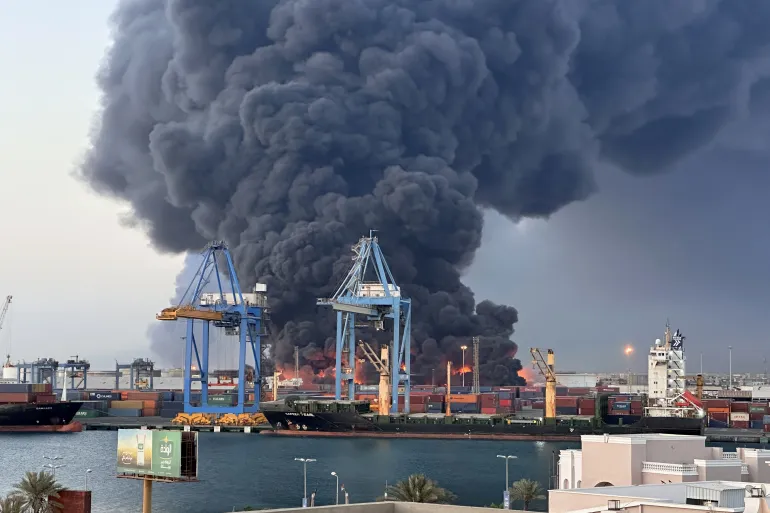
SOUTH SUDAN FACES ECONOMIC COLLAPSE AMID OIL EXPORT THREAT FROM SUDAN.
South Sudan is at risk of economic collapse after Sudan threatened to shut down the pipeline it uses to export oil, which accounts for over 90% of its government revenue. The move is linked to rising tensions as Sudan accuses South Sudan of supporting its enemy, the RSF.
- 1 year, 2 months
AUSTRALIA'S ENERGY FUTURE BRIGHTENS AS OMEGA CONFIRMS MAJOR OIL AND GAS DISCOVERY IN TAROOM TROUGH.
Omega Oil and Gas has unveiled a significant breakthrough in Australia’s Taroom Trough, confirming an extensive oil and gas system within its Canyon project. Backed by high-quality pulsed neutron logging, the findings reveal a thicker, higher-grade petroleum reservoir than previously thought, with the potential to transform the region into a major energy hub. This discovery not only strengthens Australia’s domestic energy security but also positions the country to attract strategic investment, create employment opportunities, and generate long-term economic growth. With crude oil quality exceeding global benchmarks and a strategic push toward commercialization underway, the project could significantly enhance Australia's role in the international oil and gas market.
- 1 year, 2 months

Africa Energy Insights (AEI) is an African platform with latest news, insights and investment report of Energy Sectors. We bridging the gap and mobilizes investment in Energy resources for Sustainable and reliable Energy supply.