Power Grid
ASIA RACES TO STOCKPILE OIL, SPEED UP RENEWABLES IN RESPONSE TO IRAN WAR.

Irene Jerry
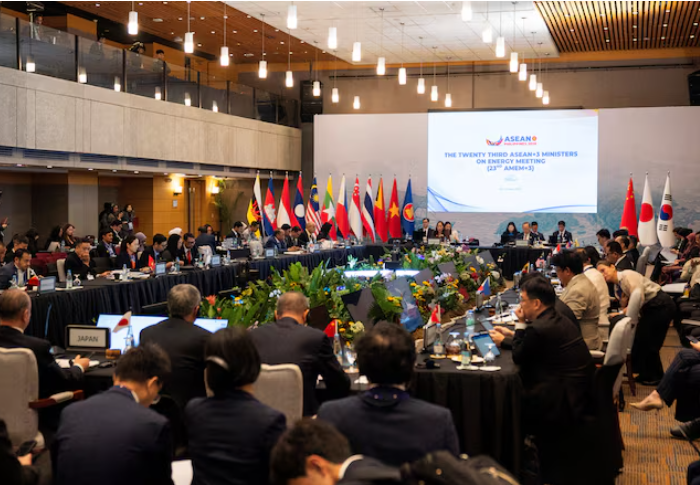
Asian countries are stepping up efforts to strengthen energy security by expanding oil storage facilities, accelerating the development of a regional electricity grid and increasing investment in renewable energy. These measures follow supply disruptions and vulnerabilities exposed by the war in Iran, which highlighted the region’s heavy reliance on imported fuel.
Southeast Asia has been particularly affected, as the region received about 80% of the oil shipped through the Strait of Hormuz from the Gulf before the conflict began.
In response, nine Southeast Asian countries, alongside Japan and Australia, have identified national oil reserve systems and voluntary regional stockpiling arrangements as key priorities. Japan has agreed with its Asian partners to develop action plans aimed at increasing crude oil reserves through the Japan-led Asia Zero Emission Community initiative.
Japan has also held discussions with Saudi Arabia and the United Arab Emirates, both of which have indicated their willingness to support efforts to expand Asia’s oil storage capacity. Meanwhile, the Philippines, which depends heavily on imported petroleum, plans to establish a national oil reserve by the end of 2027, with the possibility of eventually transforming it into a regional storage facility.
Alongside efforts to secure oil supplies, ASEAN member states have pledged to increase the contribution of renewable energy to their overall energy systems. The countries aim to achieve a 30% share of renewables in total primary energy supply and a 45% share of installed electricity generation capacity.
However, progress remains below expectations, with renewable energy accounting for only 14.1% of primary energy supply, compared with the 25% target for 2025. Renewable sources have also contributed 33.7% of installed power capacity since 2020, falling short of the 35% target, according to the ninth ASEAN energy outlook. The figures underscore the challenges facing the region in transitioning towards cleaner and more sustainable energy sources.
ASEAN countries have also reached an enhanced preliminary agreement to accelerate the development of a regional electricity grid, a proposal that dates back to December 1997. The initiative is intended to strengthen electricity connectivity among member states and improve the reliability of regional power supplies. Philippine Energy Secretary Sharon Garin described the agreement as a major milestone, noting that the original target of achieving regional connectivity by 2045 was too distant.
Officials are now reviewing the timeline to speed up implementation. Together, stronger oil reserves, increased renewable energy adoption and improved electricity interconnections are expected to enhance Southeast Asia’s resilience to future energy supply shocks.
Comments

Africa Energy Insights (AEI) is an African platform with latest news, insights and investment report of Energy Sectors. We bridging the gap and mobilizes investment in Energy resources for Sustainable and reliable Energy supply.