Hydropower
NIGERIA PLANS HYDROGEN FUEL DEVELOPMENT TO POWER INDUSTRIES AND ADVANCE CLEAN ENERGY TRANSITION
JUMA SULEIMAN
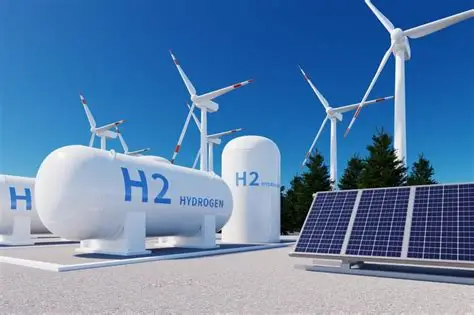
The initiative was highlighted by Nigeria's Minister of Budget and Economic Planning, Abubakar Bagudu, during a high-level international dialogue on hydrogen development held over the weekend. The discussions brought together policymakers, investors, project developers and standards organisations to examine practical strategies for expanding hydrogen production and use across different sectors. During the event, Bagudu held separate meetings with the International Hydrogen Fuel Cell Association (IHFCA) and the United Nations Industrial Development Organisation (UNIDO), where discussions focused on Nigeria's renewable energy agenda, investment opportunities and potential areas of technical cooperation. The government used the platform to showcase ongoing economic reforms while encouraging global partners to participate in the country's emerging hydrogen economy.
Hydrogen is increasingly viewed as one of the world's most promising clean energy sources because it produces little to no carbon emissions when used as fuel, making it suitable for powering heavy industries, transportation and other energy-intensive sectors. NIGERIA'S PLANS TO INTRODUCE HYDROGEN FUEL REPRESENT A MAJOR STEP TOWARD BUILDING A MODERN CLEAN ENERGY ECONOMY WHILE ATTRACTING NEW INVESTMENT INTO THE COUNTRY'S INDUSTRIAL SECTOR. The International Hydrogen Fuel Cell Association, which organised the dialogue, works across the entire hydrogen value chain, from research and technology development to industrial deployment, offering Nigeria access to global expertise and innovation that could accelerate domestic hydrogen projects.
As part of the visit, Bagudu toured Madrid's municipal hydrogen production and refuelling facility, regarded as Europe's first hydrogen-powered public transport hub. The facility produces green hydrogen through electrolysis powered entirely by solar energy, with hydrogen compressed, stored and distributed on-site to fuel a fleet of hydrogen-powered buses. Supported by more than €17.2 million in European Union funding, the project serves as a practical model for Nigeria's future ambitions. The visit also builds on Nigeria's recent membership in the Africa Green Hydrogen Alliance, reinforcing the country's determination to become an active participant in Africa's clean energy transition and positioning itself as a future leader in renewable hydrogen production and industrial decarbonisation.
Comments

Africa Energy Insights (AEI) is an African platform with latest news, insights and investment report of Energy Sectors. We bridging the gap and mobilizes investment in Energy resources for Sustainable and reliable Energy supply.